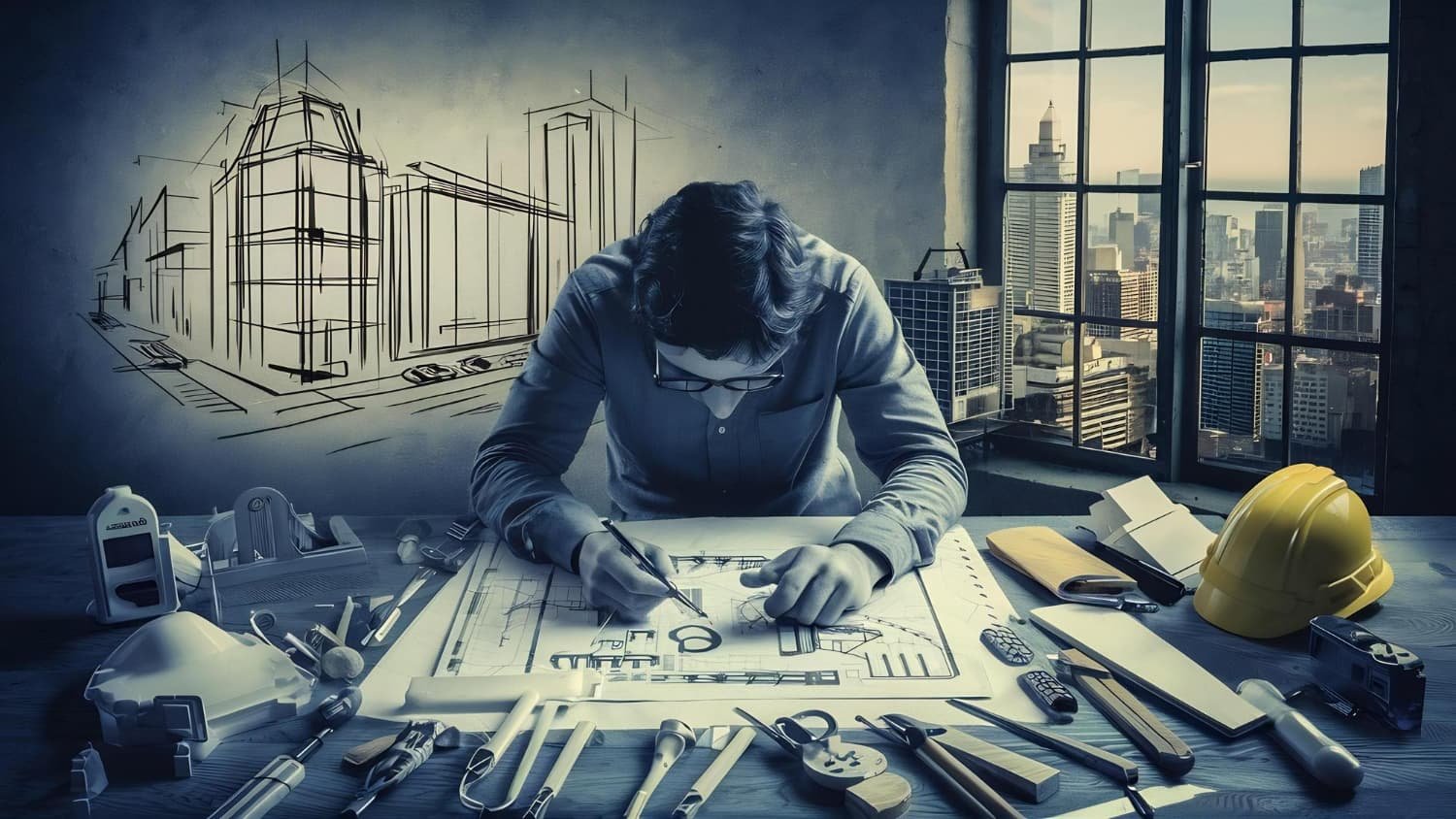
Why Most Construction Projects Fail – And the One Thing That Could Have Saved Them
Every construction project begins with optimism.
A family imagines their dream home.
A developer envisions a landmark building.
A hotel owner sees guests walking through elegant corridors that once existed only on paper.
Drawings are approved. Budgets are discussed. Contractors are hired. Work begins.
And yet, somewhere along the journey, many projects begin to lose direction.
Budgets expand.
Timelines stretch.
Quality compromises appear.
Stress replaces excitement.
What was once a carefully imagined project slowly turns into a complicated struggle.
The surprising truth is that these failures rarely happen because of poor design or lack of ambition. Most construction projects falter for a far simpler reason:
They are not professionally managed.
Behind almost every successful building is something that most people never see — structured project management.
Construction Is More Complex Than It Appears
To someone outside the industry, construction may look straightforward: materials arrive, workers build, and a structure gradually takes shape.
But in reality, construction is a delicate coordination of dozens of moving parts.
A single project may involve:
- Architects developing the design
- Structural engineers ensuring safety
- Contractors executing the work
- Suppliers delivering materials
The Five Silent Reasons Construction Projects Fail
1. Projects Begin Without Strategic Planning
One of the most common mistakes happens before construction even begins.
Many projects start with enthusiasm but without a detailed roadmap. Early estimates are often rough, timelines optimistic, and risks underestimated.
When work begins, reality quickly introduces unexpected challenges — design conflicts, cost variations, and logistical complications.
Proper project management transforms the planning stage into a strategic foundation. It identifies risks, aligns budgets with real costs, and creates a clear sequence of execution long before the first brick is laid.
2. Budgets Slowly Spiral Out of Control
Few project owners expect their budgets to increase dramatically. Yet budget overruns remain one of the most frequent issues in construction.
Costs rise due to multiple factors: sudden material price changes, design modifications, inefficient procurement, or poor cost tracking.
Without disciplined financial oversight, these increases accumulate quietly until they become significant.
Professional project management introduces continuous cost monitoring, procurement planning, and transparent reporting — allowing owners to maintain financial control throughout the project lifecycle.
3. Teams Work Without Unified Coordination
Construction projects involve numerous professionals, each with their own responsibilities and priorities.
Architects focus on design intent.
Engineers concentrate on structural integrity.
Contractors manage labor and execution.
Without a central coordinating authority, communication gaps appear. Misunderstandings grow. Work may need to be repeated.
Project management creates a central command structure that ensures every team moves in the same direction, guided by shared objectives and timelines.
4. Time Slips Away
Time delays are one of the most frustrating aspects of construction.
A project scheduled for one year may extend far beyond its original completion date. Delays may occur due to inefficient scheduling, resource shortages, approval delays, or poor supervision.
The longer a project extends, the greater the financial and emotional cost becomes.
Effective project management introduces milestone tracking, structured scheduling, and accountability systems that maintain consistent progress.
5. Quality Begins to Decline
When projects experience financial pressure or scheduling stress, quality can quietly deteriorate.
Inferior materials may be used. Workmanship standards may slip. Long-term durability may be compromised.
Without consistent supervision, these issues often remain unnoticed until it is too late.
Professional project management ensures continuous quality monitoring, technical compliance, and strict execution standards that preserve the integrity of the final structure.
The One Element That Prevents Most Failures
When examining unsuccessful construction projects, a clear pattern emerges.
The missing element is rarely talent, ambition, or resources.
What is missing is structured leadership of the entire project process.
This leadership comes in the form of professional project management.
Project management is not merely supervision. It is a disciplined system that controls every stage of the project journey, including planning, coordination, budgeting, execution, and risk management.
It acts as the invisible framework that holds the entire project together.
How Professional Project Management Changes Everything
When expert project management is involved from the beginning, the dynamics of construction change dramatically.
Instead of reacting to problems, the project operates proactively.
Planning becomes clearer.
Communication becomes structured.
Costs remain controlled.
Timelines become realistic.
Most importantly, the project owner gains confidence that every decision is guided by expertise and long-term vision.
A Smarter Way to Build
Many property owners assume that hiring a project management consultant increases project expenses.
In practice, the opposite is usually true.
The cost of professional project management is often far smaller than the financial losses caused by delays, miscommunication, poor procurement decisions, or construction errors.
When managed professionally, projects become more predictable, efficient, and successful.
Instead of constant uncertainty, there is clarity.
Instead of stress, there is progress.
Final Thought
Every building begins as an idea.
Turning that idea into a successful structure requires far more than materials and labor. It requires planning, discipline, coordination, and constant oversight.
When these elements are carefully managed, construction becomes not just a process — but a carefully orchestrated achievement.
The reality is simple:
Most construction projects do not fail because the vision was flawed.
They fail because the execution lacked professional management.
And that is the one factor that can transform a challenging construction journey into a successful and rewarding outcome.
Latest Post

What Does a Construction Project Management Consultant Actually Do?
Construction Project Timeline: How Long Does It Really Take to Build?

10 Mistakes Property Owners Make During Construction Projects